Summer Fines
How AI reduces traffic fine processing time from 20+ minutes to 2 minutes
Edited by
Posted by
The Fine Hub

Fine handling is full of small manual steps
Traffic fine management often looks simple from the outside. A fine arrives, the team checks it and the next step is taken. In practice, each fine can contain several small tasks: reading the document, identifying the fine issuer, checking the vehicle, matching the driver, understanding the payment term and communicating with the customer or driver.
Those steps take time. They also repeat across countries, authorities and document types. That is where AI powered fine management can create practical value.
The 20+ minutes to 2 minutes claim
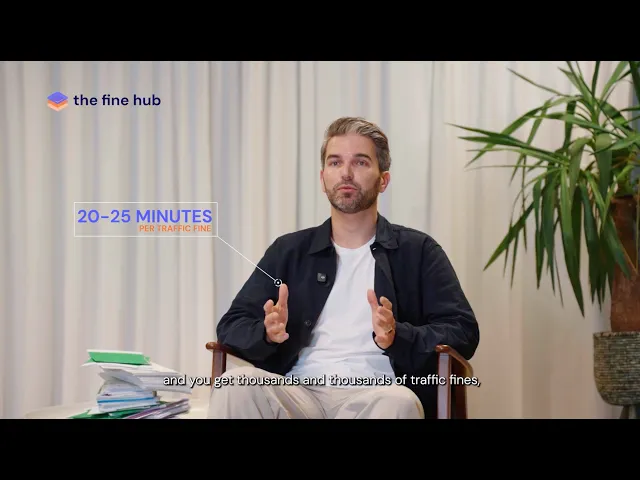
In the Summer Fines video context, Max explains that AI can help reduce traffic fine processing from 20+ minutes to 2 minutes per fine. That claim should be understood as a video-backed example of the efficiency opportunity, not as a universal guarantee for every situation.
The wider point is clear: when a process contains many repetitive checks, structured automation can reduce the time people spend on manual handling.
What AI can support in the workflow
AI powered traffic fine management can help with recognizing and structuring information from fine documents, supporting language and authority interpretation, helping teams understand what action is required, routing fines into a more consistent workflow and reducing repetitive manual checks before customer communication.
The goal is not to remove control from the team. The goal is to help the team process fine information faster and with fewer avoidable mistakes.
Why this matters for European fleets
Rental companies, leasing companies, fleet management companies, shared mobility companies and companies with large vehicle fleets often deal with fines from many different European authorities. The complexity is not only volume. It is the mix of languages, rules, deadlines and document formats.
AI powered processing helps when that variety becomes too much for a purely manual workflow. It gives teams a stronger basis for Straight Through Processing, better customer communication and more consistent internal follow-up.
The takeaway
AI in traffic fine management is valuable when it is connected to the real operational workflow. The benefit is not an abstract AI feature. It is the ability to reduce repetitive manual work, improve control and help teams process fine information faster. For European fleets, moving from 20+ minutes to 2 minutes per fine shows why automation can become a serious operational advantage.